Welcome aboard! Crypto’s wild potential isn’t some made-up legend — it’s a hard-earned reality that calls for discipline, calculated risks, and the cunning to evade the traps that crush most novices. If you’re a crypto beginner staring at terms like Bitcoin and blockchain with a mix of curiosity and confusion, you’re in the right place. Crypto, short for cryptocurrency — digital or virtual money secured by cryptography, making it nearly impossible to counterfeit — offers a gateway to financial opportunities beyond traditional banking. Powered by blockchain — a decentralized ledger that records transactions across a network of computers — it eliminates middlemen like banks. With Bitcoin averaging around $91,000 in December 2025, even a small entry can compound into something substantial. This guide breaks it down simply: from how to setup crypto wallet to choosing exchanges and making that inaugural buy. We’ll keep it straightforward to help you learn crypto basics and start investing safely. Let’s get you started without the overwhelm, and by the end, you’ll have the confidence to dip your toes in as a cryptocurrency for newbies.
First, understand the foundation. Cryptocurrencies are digital assets designed to work as a medium of exchange, using strong cryptography to secure transactions and control the creation of new units. Unlike fiat money like dollars or euros, they’re not issued by governments but by decentralized networks, often through processes like mining (solving complex mathematical problems to validate transactions and earn new coins) or staking (locking up coins to support the network and earn rewards). The big appeal? Potential for high returns, borderless transactions that cross international lines without hefty fees or delays, and financial inclusion for the unbanked populations worldwide. But volatility is the flip side — prices can soar or plummet quickly due to market sentiment, regulatory news, technological developments, or even viral social media trends. As a crypto beginner, focus on education over speculation. This isn’t get-rich-quick; it’s build-wealth-smart, and rushing in without knowledge is like jumping into a pool without checking if there’s water.
To put it in perspective, the crypto market cap stands at over $3 trillion today, rivaling major stock indices. It’s a space where innovation thrives, from decentralized apps (dApps, applications running on blockchain without central control) to tokenized real-world assets (like digital shares of real estate). But remember, while the upside is tantalizing, the downside can be brutal — think 80% drops in bear markets. Starting with crypto basics ensures you navigate this with eyes wide open, minimizing risks while maximizing learning.
Why Start with Crypto? The Beginner’s Big Picture
Crypto represents a shift from centralized finance to decentralized systems, where you control your assets directly without relying on banks or governments. Bitcoin, the first and most famous crypto created in 2009 by the pseudonymous Satoshi Nakamoto, kicked it off as digital gold with a fixed supply of 21 million coins, creating scarcity that drives value as demand grows. Ethereum followed in 2015, introducing smart contracts — self-executing contracts with the terms of the agreement directly written into code — enabling a whole ecosystem of applications like decentralized finance (DeFi, peer-to-peer financial services on blockchain) and non-fungible tokens (NFTs, unique digital assets representing ownership of items like art, music, or collectibles).
Solana, launched in 2020, adds another layer with its high-speed blockchain capable of thousands of transactions per second at low costs, making it ideal for gaming, NFTs, and meme coins. It’s like the express lane compared to Ethereum’s highway, with fees often under a penny versus dollars on congested networks. This accessibility makes Solana a favorite for cryptocurrency for newbies exploring fast-paced ecosystems without breaking the bank on gas fees (transaction costs on blockchain).
For crypto beginners, the allure is multifaceted accessibility. You don’t need a bank account, credit history, or high minimums to start; a smartphone and internet connection suffice. Potential returns often outpace traditional investments like stocks or bonds — Bitcoin’s average annual return since inception is over 200%, though past performance isn’t a guarantee. Borderless nature means sending money to family abroad in minutes, bypassing wire fees. And for the unbanked, it’s a lifeline to global finance.
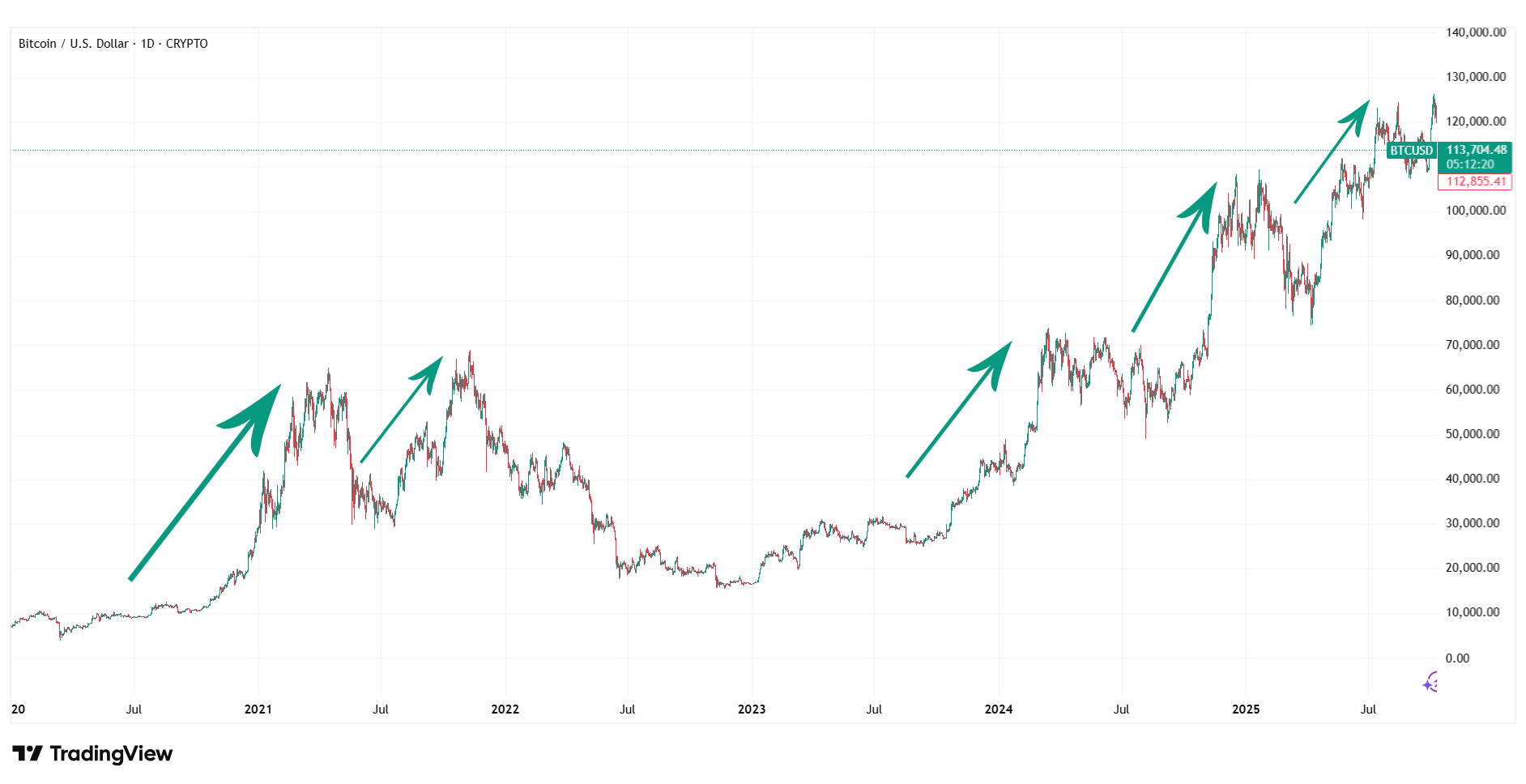
But let’s be real: risks abound. In 2021, Bitcoin surged from $29,000 to $69,000, turning a $1,000 investment into over $2,300 in months. Yet, the 2022 bear market (a prolonged price decline) dropped it to $16,000, a stark reminder of volatility. As of now, with institutional adoption via spot Bitcoin ETFs (exchange-traded funds that allow traditional investors to gain exposure without direct ownership), the space is maturing, attracting billions in inflows. Starting small lets you learn without ruin — think of it as an education fund, not your life savings. And if you’re aiming higher, our article on How to Turn $1,000 into $1 Million in Crypto provides proven strategies to scale up once you’re comfortable.
Before jumping in, assess your risk tolerance. Crypto isn’t regulated like stocks, so protections are limited. Educate yourself on common pitfalls, like scams where fraudsters promise guaranteed returns — if it sounds too good, it probably is. Resources like CoinDesk or our book Risk it All, Earn it All offer deeper dives into managing these hazards. Set realistic expectations: This is a marathon, not a sprint, and patience is your best ally.
Setting Up Your First Crypto Wallet: The Secure Foundation
A crypto wallet is essential — it’s not a physical wallet but software or hardware that stores your private keys, the cryptographic codes that prove ownership of your coins and allow you to sign transactions. Think of it as a digital bank account you fully control, where public keys (like account numbers) receive funds, and private keys (like PINs) authorize spends. Losing private keys means losing access forever, so security is paramount.
There are several types to suit different needs: hot wallets (connected to the internet for convenience but more vulnerable to hacks) and cold wallets (offline for maximum security, ideal for long-term storage). Custodial wallets (managed by exchanges, where they hold your keys) versus non-custodial (you control keys, true ownership but more responsibility).
For absolute beginners, start with a non-custodial software wallet like Trust Wallet or MetaMask. Trust Wallet, developed by Binance but independent, is mobile-first (iOS and Android) and supports over 10 million assets across 100+ blockchains, including Bitcoin, Ethereum, Solana, and BNB Chain. It’s free, with features like in-app staking (earning rewards by locking coins) and dApp browser for interacting with DeFi. Security includes biometric authentication and encrypted backups. MetaMask, the go-to for Ethereum, has over 30 million users and works as a browser extension or app, perfect for exploring NFTs or DeFi on Ethereum-compatible chains. It supports custom networks, so you can add Solana if needed.
For Solana fans, consider OKX — a robust centralized exchange with strong support for SOL trading, competitive fees starting at 0.1%, and advanced tools for beginners — or DEXs like Raydium on Solana, known for lightning-fast trades and low fees ($0.00025 average). Raydium integrates with Phantom wallet for seamless swaps.
If your holdings grow beyond $1,000 or you’re paranoid about hacks (rightly so, given $2 billion stolen in 2023), upgrade to hardware wallets like Ledger Nano X or Trezor Model One. Ledger Nano X, priced around $149, is Bluetooth-enabled for mobile use, supporting 5,500+ assets including Bitcoin, Ethereum, and Solana via integrations. It stores keys offline, connecting only for transactions, and has passed rigorous security audits. Trezor Model One, at $59, is open-source (code publicly auditable for transparency) and supports major coins, with a focus on simplicity. Both resist physical tampering and malware.
Detailed setup steps for a software wallet like Trust or Phantom:
- Download from official app stores or sites (trustwallet.com or phantom.com) — avoid third-party links to dodge malware.
- Create a new wallet; it’ll generate a seed phrase (12–24 words — your master key; write it on paper, store in a safe, never digitize or share).
- Verify by re-entering a few words.
- Set a PIN or biometrics.
- Back up — some apps like MetaMask allow encrypted cloud backups, but manual is safest.
For hardware: Plug in, follow on-screen setup via companion app (Ledger Live or Trezor Suite), generate seed, and verify.
Practice with testnet (fake networks for simulation) if available, like Solana’s devnet on Phantom. Fund via fiat on-ramps (buy crypto with card/bank) built into wallets like Trust’s integration with MoonPay (a fiat-to-crypto service with low fees). Remember, seed phrases are sacred — lose them, and your crypto is gone forever. For paper wallets (extreme cold storage), generate offline via tools like Ian Coleman’s BIP39 generator, print keys, and store securely, but they’re less user-friendly for beginners.
Security tips expanded: Always enable 2FA (two-factor authentication, adding a code from an app like Google Authenticator or Authy). Use unique, complex passwords managed by tools like LastPass or Bitwarden. Avoid public Wi-Fi for sensitive actions. Regularly update apps for bug fixes. In case of compromise, transfer funds immediately to a new wallet. Wallets like these have safeguarded assets amid major hacks, such as the 2022 Ronin Bridge exploit ($625 million stolen) or the 2023 Multichain breach ($126 million), where users with cold storage remained unscathed.
Once set up, send a small test transaction (e.g., $10 in USDC, a stablecoin pegged to $1) to familiarize yourself. For more on securing gains as you grow, our book Risk it All, Earn it All dives into advanced protection strategies, including multisig setups and insurance options.
Choosing the Right Crypto Exchange: Your Gateway to Buying
An exchange is where you buy, sell, and trade crypto, functioning like a digital stock market but 24/7. Centralized exchanges (CEXs) like Coinbase or Binance are beginner-friendly, handling custody and offering fiat gateways (buy with dollars/euros). Decentralized exchanges (DEXs) like Uniswap trade directly from wallets, offering privacy but requiring more tech savvy.
For absolute beginners, Coinbase shines with its intuitive interface and educational hub (earn free crypto by learning). Available in 100+ countries, it supports 250+ assets, with fees at 0.5-4.5% for simple buys (lower on Coinbase Advanced Trade at 0-0.6%). It accepts bank transfers, cards, and PayPal, with $250 million insurance on hot storage. Security is top-notch, with 98% of assets in cold storage.
Binance, the volume king (over $20 billion daily), suits those wanting variety (600+ coins) and low fees (0.1% spot, discounts with BNB token). Use Binance.US for US residents to comply with regulations. It offers staking, lending, and futures, but KYC is required for full access.
Kraken is a secure pick for US/EU users, with low fees (0.16-0.26%) and strong compliance. It supports fiat in 7 currencies and has never been hacked in 13 years. Gemini (for US), backed by the Winklevoss twins, focuses on security with SOC 2 certification and full reserves, fees at 0.35% for active trading.
For Solana, consider KuCoin — a reliable centralized exchange offering robust SOL trading with solid liquidity, fees beginning at 0.1% for active traders, and a user-friendly platform ideal for those new to the game — or opt for Orca, a Solana-based DEX renowned for ultra-fast transactions and minimal fees around $0.0003, with smooth integration via Phantom wallet for effortless swaps.
DEXs expand options: Uniswap on Ethereum for ERC-20 tokens, with v3’s concentrated liquidity improving efficiency. PancakeSwap on BNB Chain offers cheap trades; Jupiter on Solana aggregates DEXs for best prices. No KYC needed, but connect wallets and pay gas — Solana’s is negligible compared to Ethereum’s $5-50 during peaks.
Choose based on factors: Location (regulations vary — e.g., US bans some like Binance), fees (aim under 1%), security (look for audits, insurance), and asset selection. Verify with ID for withdrawals over limits. Test with $50 deposits. Exchanges handle trillions annually; Coinbase processed $462 billion in 2021 alone. For spotting market opportunities once onboard, read our article Spotting Crypto Pumps Before They Explode.
Pro tip: Use limit orders to buy at desired prices, avoiding market slippage (price changes during execution). Compare fees — a 2% fee on $100 is $2 lost. For advanced trading, platforms like Bybit or KuCoin offer derivatives, but stick to basics first.
Making Your First Crypto Buy: Step-by-Step Guide
Ready to buy? Here’s an expanded, foolproof process with tips for smooth execution.
Step 1: Fund your exchange account. Link a bank (ACH transfers free but take 3-5 days) or card (instant but 3-4% fees). On Coinbase, verify identity first for limits up to $25,000 daily. Use stablecoins like USDC for transfers to avoid volatility during funding.
Step 2: Research and choose your coin. Start with Bitcoin (store of value) or Ethereum (utility for dApps). Check market cap, volume, and history on CoinGecko — Bitcoin’s $2.4 trillion cap signals stability. For diversity, add Solana (SOL at $150, known for speed). Avoid obscure coins initially to dodge scams.
Step 3: Place the order. In the app, select “Buy,” choose coin, enter amount (e.g., $100). Market order executes immediately; limit sets a price threshold (buy Bitcoin if it dips to $120,000). Confirm fees and preview.
Step 4: Secure your purchase. Withdraw to your wallet immediately — on Binance, select network (e.g., BTC for Bitcoin), paste wallet address (double-check!), and send. Fees vary: Bitcoin $5-20, Solana under $0.01. Test with $10 first to verify addresses.
Step 5: Monitor and log. Use wallet apps for balances; track costs for taxes via apps like CoinTracker (integrates with exchanges). Set price alerts on TradingView for your coins.
Common mistakes: Buying during hype peaks — wait for dips. Ignoring fees — they add up; use low-cost networks like Solana. Forgetting taxes — in the US, short-term gains (under 1 year) tax as income (up to 37%); long-term lower (0-20%). Tools like Koinly or TaxBit automate reports, integrating with wallets/exchanges.
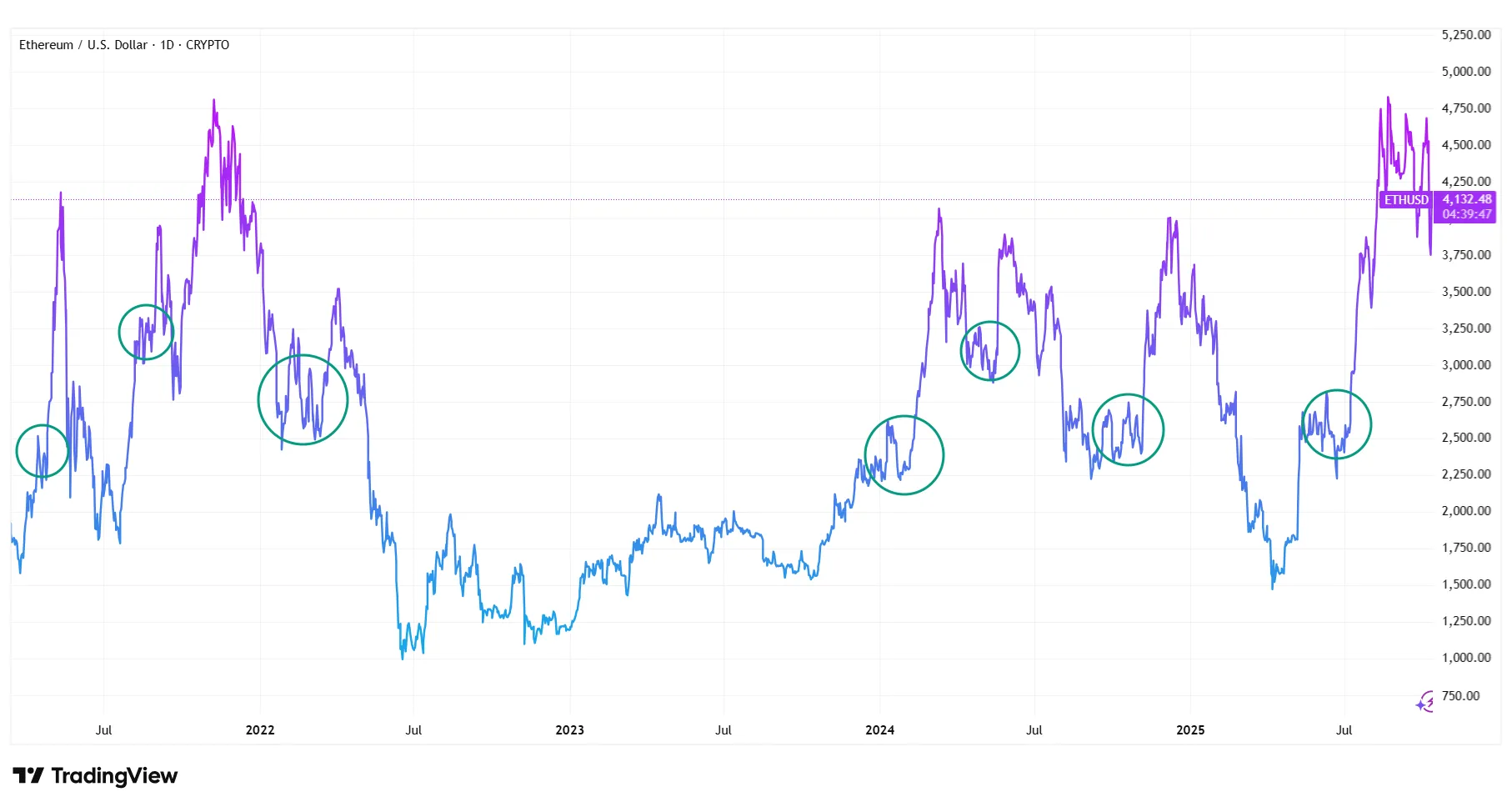
Expanded tip: Use DCA — buy $50 weekly regardless of price to average in. Our book Your First Million in Crypto expands on DCA for exponential growth, with real examples from past cycles.
Post-buy: Explore earning — stake ETH on Lido (decentralized staking pool) for 3-5% APY without locking periods. On Solana, stake SOL via Phantom for 6-8% rewards. This turns idle holdings into passive income.
Security Essentials: Protecting Your New Assets
Security is paramount in crypto — transactions are irreversible, like cash handed over. A hack or lost key means permanent loss. Start with basics: Use strong, unique passwords (at least 12 characters, mix types) managed by password managers like Bitwarden (free and secure).
Enable 2FA everywhere — prefer app-based (Google Authenticator or Authy) over SMS, as SIM swaps (hijacking phone numbers) are common scams. For wallets, biometric locks add convenience without sacrificing safety.
Avoid phishing: Scammers mimic sites/emails — always check URLs (e.g., coinbase.com, not co1nbase.com). For hardware, buy direct from manufacturers to avoid tampered devices.
Multisig wallets require multiple signatures for transactions, like requiring two keys for a safe. Gnosis Safe on Ethereum or Squads on Solana offer this for added protection, great for larger holdings.
Backup strategies: Store seed phrases in multiple secure locations — metal etchings like Billfodl resist fire/water. Never store digitally; hackers target clouds.
In 2023, hacks stole $1.7 billion, mostly from hot wallets or bridges (protocols connecting blockchains). Cold storage prevented 95% of potential losses. Insurance options: Exchanges like Gemini offer coverage; third-parties like Nexus Mutual insure against smart contract failures.
Advanced: Use VPNs for privacy, rotate addresses for transactions. Regularly audit holdings. If compromised, isolate and transfer to new wallets immediately.
Basic Strategies for Beginners: Beyond the Buy
With your first buy secured, ease into strategies. HODLing: Buy quality assets and hold long-term, ignoring short-term noise. For real stories, see our article Why HODLing Leads to Financial Freedom, showcasing holders turned millionaires.
DCA: Invest fixed amounts periodically — $50 bi-weekly into Bitcoin reduces timing risk. Over 5 years, it outperformed lump-sum 68% of the time in volatile markets.
Staking: Lock coins to validate transactions, earning rewards. On Ethereum, stake via Coinbase for 4% APY; Solana via Phantom for 7%. Minimums low — 0.01 SOL (~$1.50).
Lending: Platforms like Aave (DeFi on Ethereum) let you lend stablecoins for 2-5% interest, collateralized to minimize default risk.
Avoid day trading — 85-95% lose money due to fees, emotions, and competition. Focus on learning; paper trade (simulate without real money) on exchanges like Binance’s testnet.
For risk-aware growth, our book Pump. Dump. Profit. teaches spotting short-term opportunities while maintaining long-term holds.
Understanding Risks: What Could Go Wrong?
Crypto’s allure hides pitfalls. Volatility: 50% drops common — Bitcoin fell 53% in 2022. Mitigate with DCA and diversification (spread across 3-5 coins).
Regulatory risks: Governments like China banned mining; US SEC scrutinizes tokens as securities. Stay updated via CoinTelegraph; hold compliant assets like Bitcoin.
Scams: Rug pulls (devs steal liquidity), ponzis (promise impossible returns), phishing. Verify projects on RugDoc or by auditing code on Etherscan. Only invest in vetted coins.
Liquidity risks: Illiquid tokens hard to sell without crashing prices — stick to top 100 by market cap.
Tech risks: Network congestion spikes fees; Solana’s outages in 2022 caused delays. Choose reliable chains.
Hacks/theft: $4 billion stolen in 2022-2023. Use cold storage, avoid sharing details.
Market manipulation: Whales (large holders) pump/dump. Watch volume for signs.
Mitigate overall: Educate, start small, diversify. For comprehensive strategies, explore Mastering Risk Management in Crypto Trading.
Next Steps: Building on Basics
Congratulations — you’re equipped. Expand: Follow CoinDesk or CryptoSlate for news; join Reddit’s r/cryptocurrency (1.5M members) or Discord communities for discussions.
Podcasts like “Unchained” demystify trends. Apps like Delta track portfolios free.
Practice: Use simulators on TradingView for chart analysis without risk.
Books and articles: Our Your First Million in Crypto guides scaling up.
Stay ethical: Crypto’s decentralized — with great power comes responsibility. Avoid shady schemes; focus on value-creating projects.
Community: Attend meetups via Meetup.com or virtual events on Eventbrite.
In closing, crypto basics empower any crypto beginner to start investing easily. From how to setup crypto wallet like Phantom for Solana to exchanges like Coinbase, you’ve got the tools to navigate securely. Embrace the journey, stay diligent, and watch your knowledge — and potentially your portfolio — grow. Questions? Hit the comments — let’s build this together.
Question: for a beginner, is USDC on Solana OK as a parking spot before buying BTC/ETH, or better to keep cash in exchange and buy directly?
The “don’t need bank account or credit history” part is why i’m here. financial inclusion matters more than memes to me!
Raydium + phantom combo is so smooth. did my first swap in under a minute, wild 🤪
The security section should be mandatory reading. 2FA app > sms, always. sim swaps are real!
Nice to see Solana mentioned for low fees. i moved my small buys there because Ethereum gas ate me alive during nft mania